Sapphires The Gemstone of September
Few gemstones command a room quite like the sapphire. Draped in centuries of royal provenance, this September birthstone stands as the ultimate token of quiet luxury, wisdom, and everlasting devotion – a favourite of monarchs and heritage jewellery houses like C. Krishniah Chetty, whose century-and-a-half legacy has long celebrated the majesty of rare – coloured gemstones.
Sapphires Come In a Rainbow of Colours
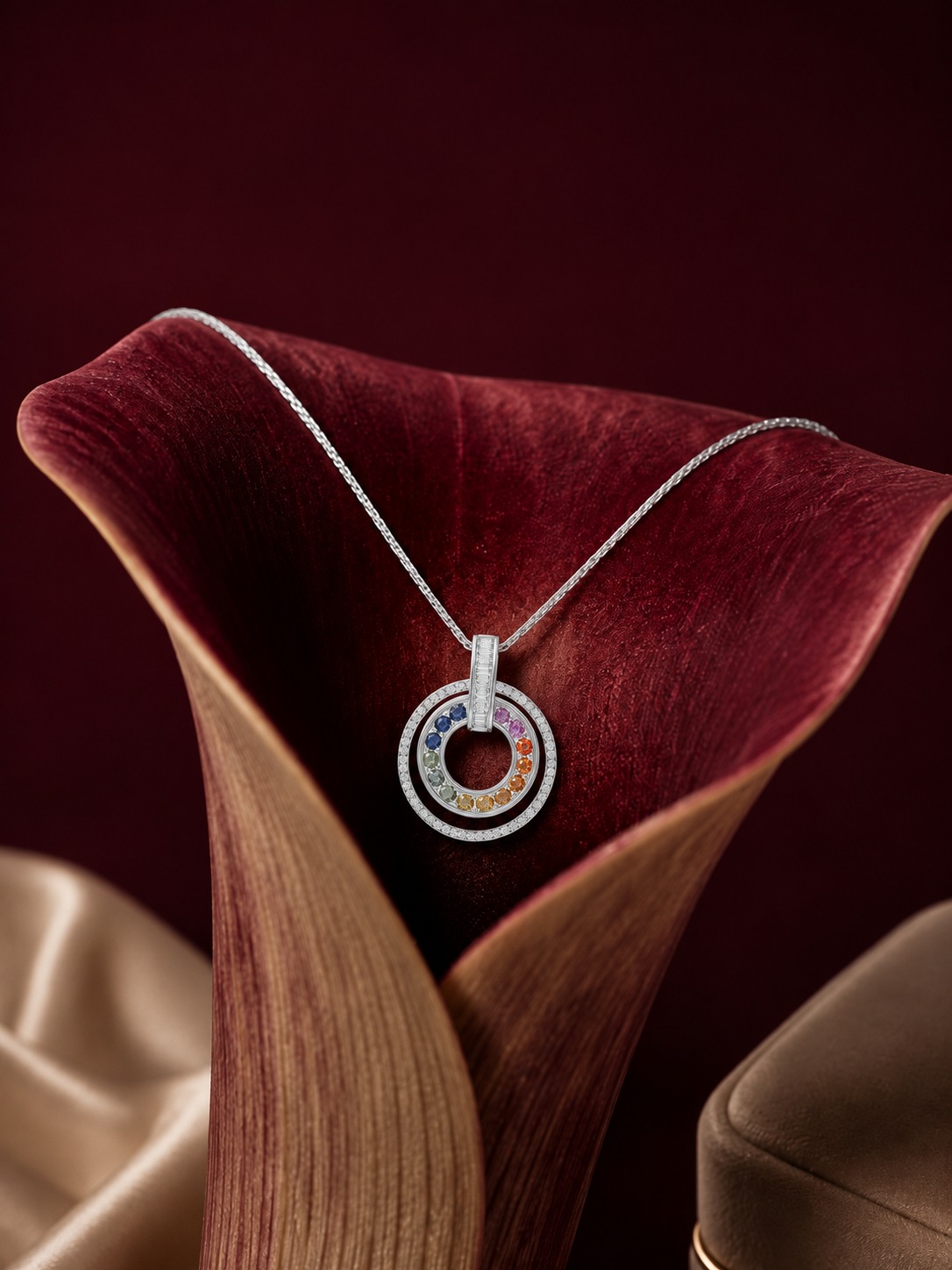
Think of sapphire and blue usually comes to mind. But sapphires come in almost every colour of the rainbow, including pink, orange, yellow, green and violet, alongside their familiar blues. The one exception is red: red corundum is called ruby.
Sapphire belongs to the mineral family corundum, and tiny traces of different elements give it colour. Iron and titanium create blue, while chromium can give sapphire its pink. Coloured varieties beyond blue are known as fancy sapphires. One of the rarest is Padparadscha, prized for its delicate blend of pink and orange.

Coveted Sapphire Origins
- Kashmir (India): Discovered in the remote Zaskar Range in the 1880s, these virtually depleted deposits produced the world’s most legendary “sleepy” cornflower blues, softened by microscopic rutile silk that gently scatters light.
- Mogok (Myanmar): Renowned for producing intense “Royal Blue” sapphires, deeply saturated, highly luminous gems that retain an electric brilliance even in low evening light.
- Ratnapura (Sri Lanka): Known as the “City of Gems,” Ceylon sources yield bright, high-clarity cornflower blues and remain the primary historical origin for fine Padparadscha sapphires.
- Ilakaka (Madagascar): A major gemmological revelation since the late 1990s, offering vivid blue and vibrant pastel sapphires that rival classic Asian mines in purity and brilliance.
- Yogo Gulch, Montana (USA): Celebrated for ethically mined, untreated sapphires with a distinctive, uniform metallic-blue luster.


Sapphire Quality and Integrity
Evaluating a fine sapphire requires a balance of tone and saturation. The ideal stone exhibits a vivid, pure colour density without veering into an inky or lifeless dark shadow. While routine thermal enhancement is a widely accepted trade standard to refine clarity, an unheated natural sapphire backed by an authoritative laboratory report from institutions like GIA represents the pinnacle of rarity. In the high-jewellery vaults of C. Krishniah Chetty, these rare unheated gems are meticulously curated for serious collectors seeking investment-grade stones.

Boasting a Mohs hardness rating of 9, second only to diamond – sapphires offer lifetime durability suitable for daily wear. Preserving their optical brilliance requires only gentle care using warm water, mild soap, and a soft brush. Whether set as a striking solitaire in cool platinum or framed by diamonds in a bespoke C. Krishniah Chetty royal heirloom mounting, a magnificent sapphire requires no elaborate display. Its natural majesty speaks with quiet, unyielding authority.
Choosing Blue Sapphire with Confidence
Blue sapphire has long been surrounded by beliefs about its influence on the wearer. Some traditions regard it as a powerful stone that can have positive or unfavourable effects. We understand that these beliefs can make some clients hesitant, even when they love the gemstone.

This service applies only to blue sapphire and is offered out of respect for our clients’ sentiments. Other sapphire colours are generally regarded as neutral in this context and do not carry the same associations with negative influences