Real Diamond Necklace Buying Guide: What to Check Before Purchasing
A diamond necklace rarely belongs to a single occasion. You may first wear it at a wedding, present it to mark an anniversary, or choose it as a personal milestone. Over time, it gathers memories and may eventually pass from one generation to the next. Its lasting significance makes the buying process about more than immediate visual appeal. The origin and quality of the diamonds, metal purity, security of the settings, and accuracy of the documentation all deserve careful consideration. If you plan to buy a real diamond necklace, review these details before deciding.
1. Understand What “Real Diamond” Means
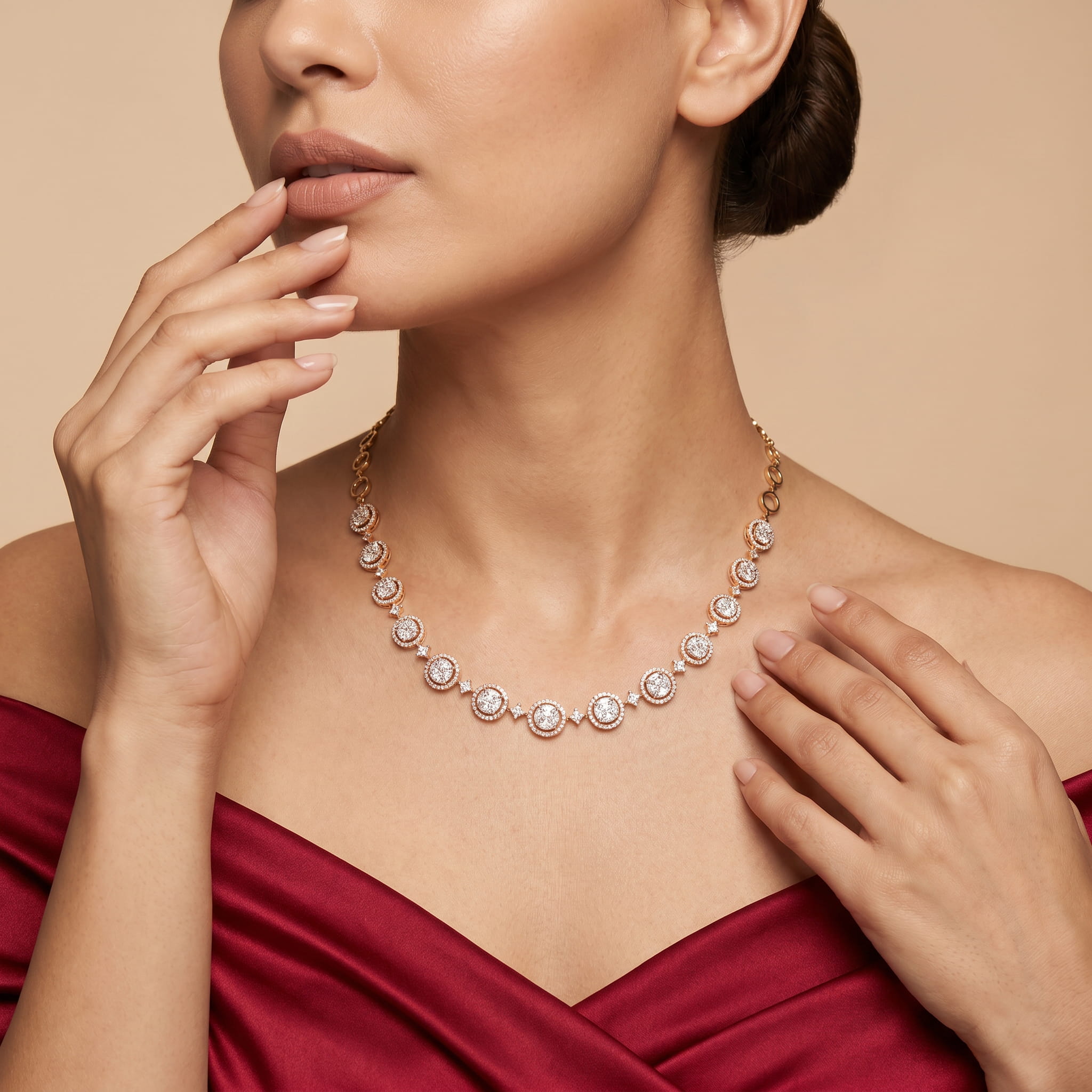
The phrase “real diamond” is common when searching for jewellery, but it doesn’t provide enough information about a stone’s origin.
Ask the jeweller to state clearly whether the necklace contains:
- Natural, below-ground-mined diamonds
- Laboratory-grown diamonds
- Diamond simulants or diamond-like materials
These descriptions should not be used interchangeably. The product details, invoice, and supporting guarantee should clearly state the origin of the diamonds.
Our lifetime guarantee confirms that every piece of jewellery is tested by the C. Krishniah Chetty Gemological Laboratory and conforms to applicable BIS requirements and Indian hallmarking rules. We also assess the diamonds using our Standard of Ethics and Diamond Eye Detection System. Clear disclosure helps you confirm the necklace matches the description provided.
2. Consider the Four Cs Together
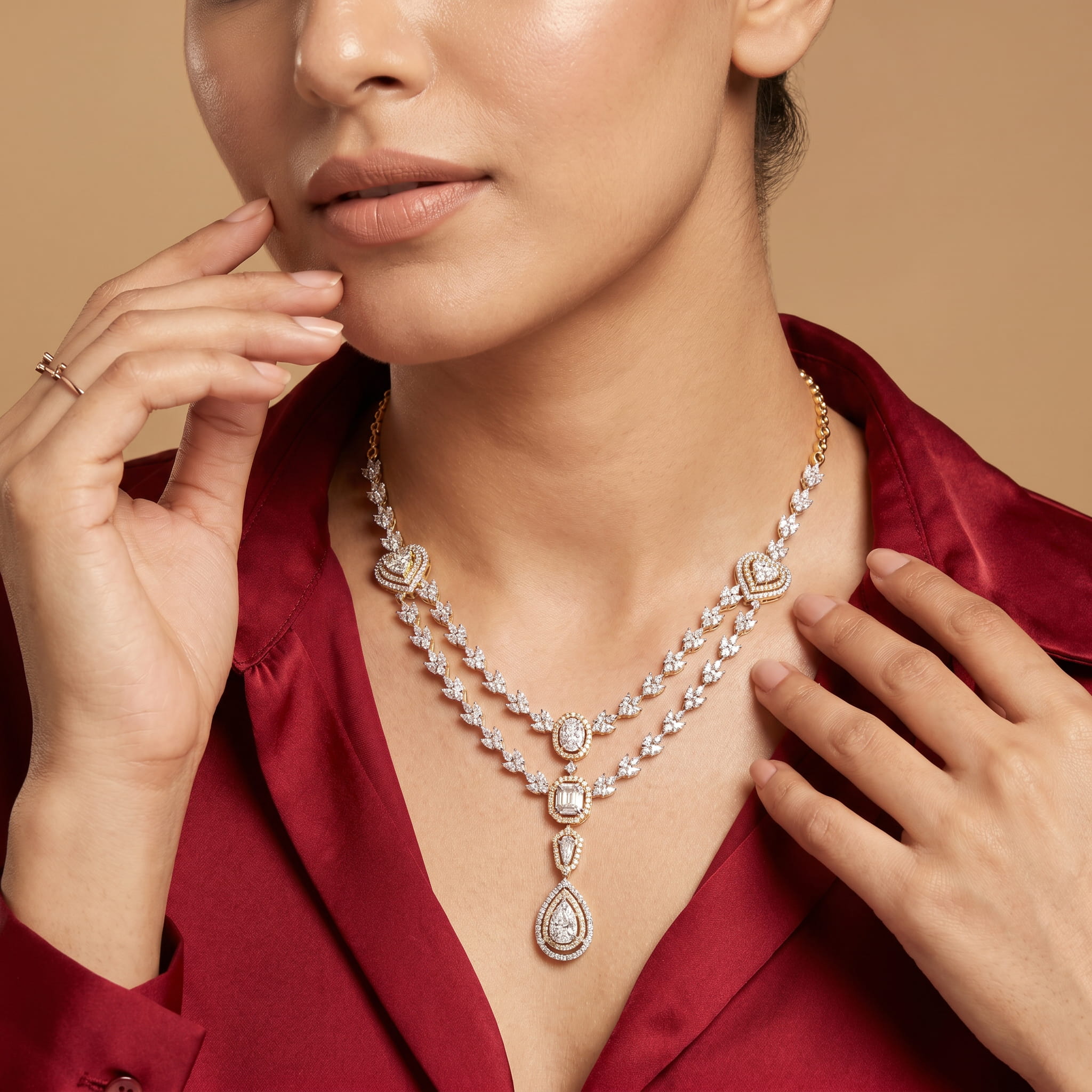
The internationally recognised Four Cs, cut, colour, clarity, and carat weight, provide a consistent way to assess diamond quality. However, consider them together rather than as four separate scores.
Cut
Cut refers to the precision of a diamond’s proportions, facets, symmetry and polish. These factors influence how effectively the stone interacts with light. In a necklace with several diamonds, consistency is especially important. Well-matched cutting characteristics create a more harmonious spread of brilliance across the design.
Colour
Diamonds in the standard colour range are graded from D to Z. D represents colourless diamonds, while progressively lower grades may show increasing traces of colour. A diamond necklace does not always require the highest colour grade. What matters is that the diamonds look well matched together and complement the chosen metal.
Clarity
Clarity evaluates a diamond’s internal characteristics and surface features under 10x magnification. The scale ranges from Flawless and Internally Flawless through VVS, VS, SI and Included grades. Small clarity characteristics may not be visible without magnification. When comparing necklaces, consider whether the diamonds look clean to the unaided eye and whether their overall appearance is consistent.
Carat Weight
Carat measures weight rather than visible size. One carat equals 200 milligrams and is divided into 100 points. A higher carat weight doesn’t automatically mean a necklace will look larger or brighter. Cut, stone distribution, setting style and the amount of visible metal can substantially influence its appearance.
Our diamond buying guide explains the Four Cs and the principal grading ranges in greater detail.
3. Distinguish Total Carat Weight From Individual Diamond Weight
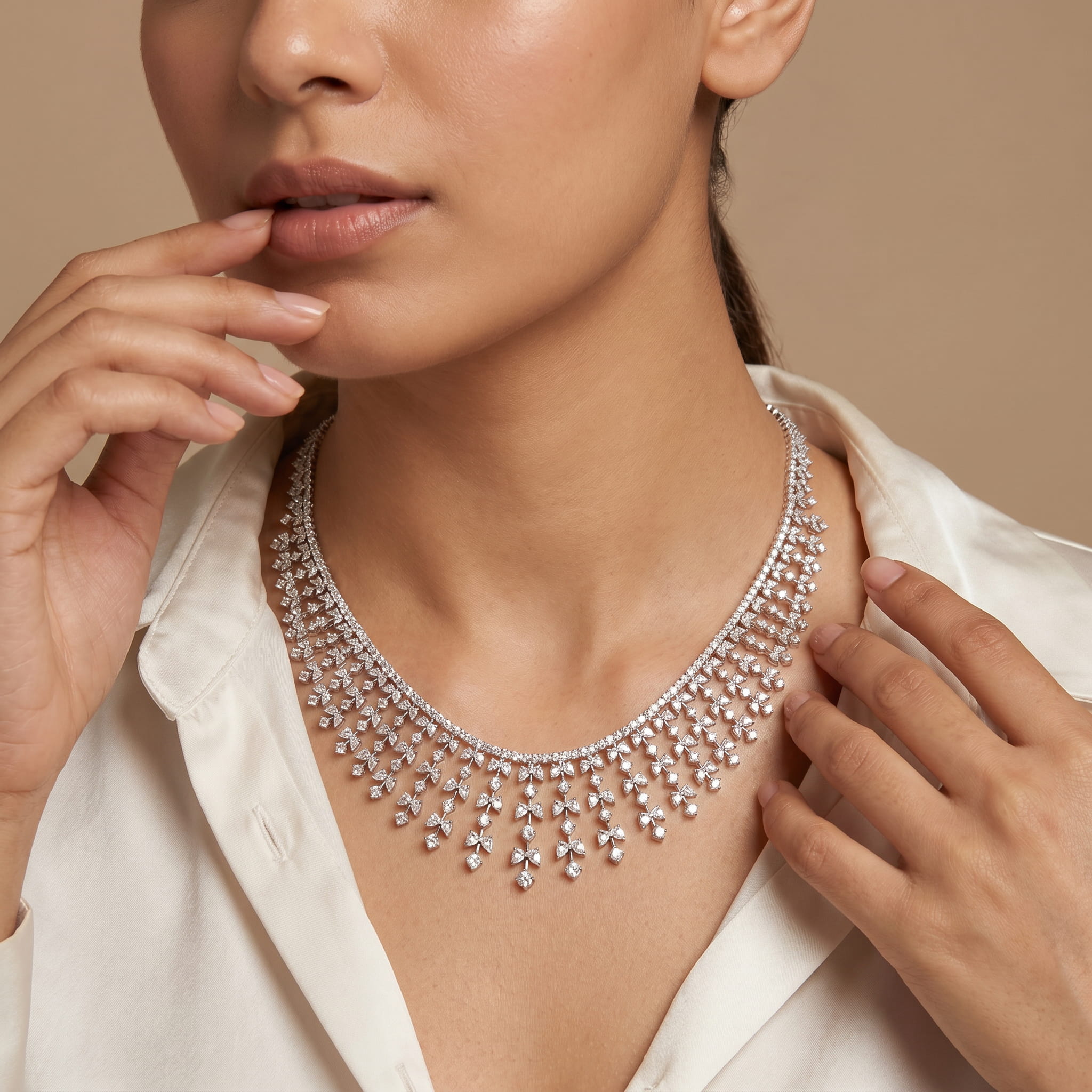
A diamond necklace may contain dozens or even hundreds of stones. The stated diamond weight will therefore often represent the combined or total carat weight of all the diamonds in the piece.
Before purchasing, ask for:
- The total number of diamonds
- The combined diamond weight
- The weight of any prominent individual diamond
- The colour and clarity range
- Details of different diamond shapes or size groups
For example, a necklace with one larger diamond and several smaller melee diamonds may have the same total carat weight as a design composed entirely of smaller stones. The two pieces can look and be valued quite differently. Reviewing both the total weight and its distribution will give you a more accurate understanding of the design.
4. Ask About Diamond Reports and Product Guarantees
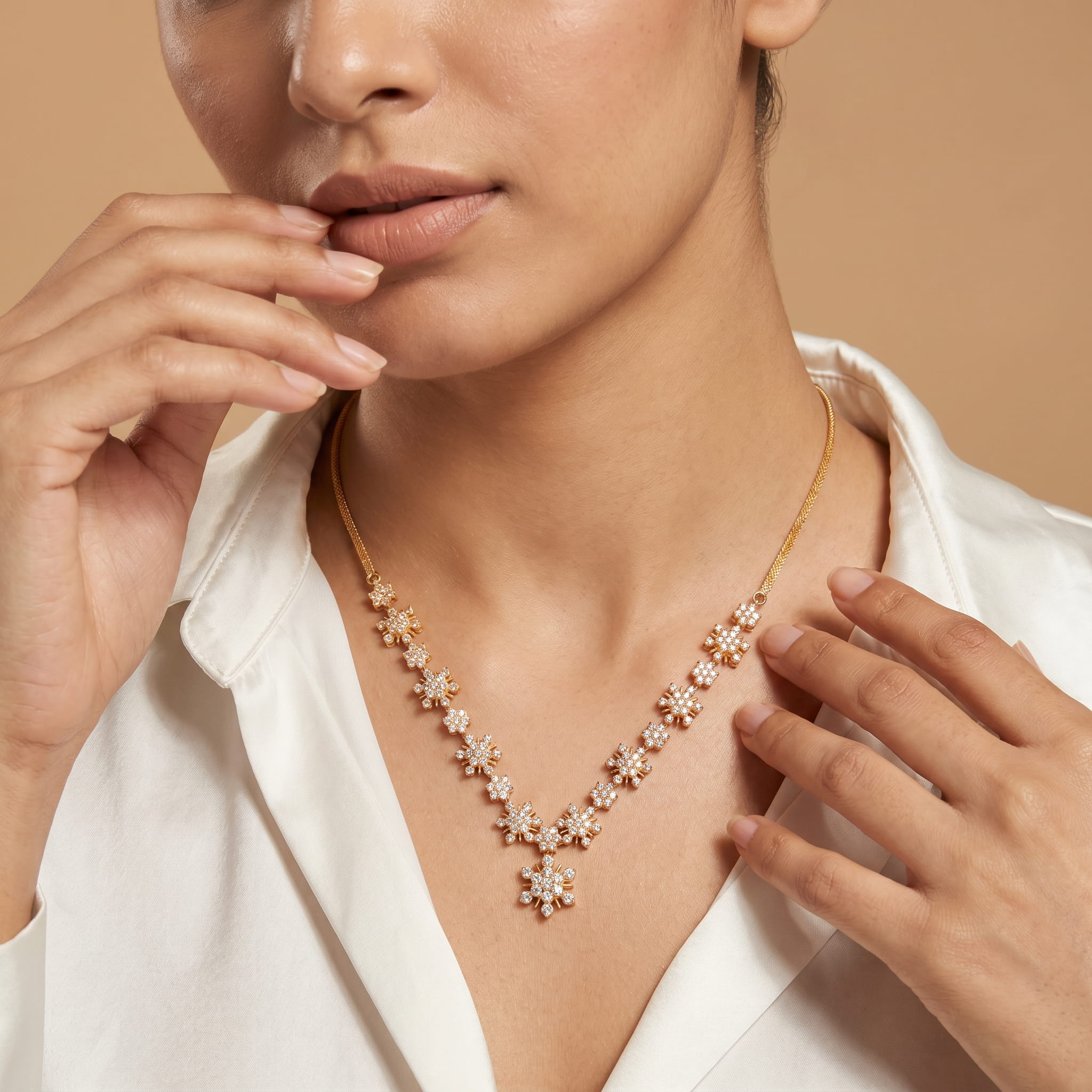
A diamond may come with different forms of documentation, including a laboratory grading report, a jeweller-issued diamond report, or a product guarantee. Each serves a different purpose, although a single document may combine report and guarantee information. Before purchasing, check who issued each document and what information or assurance it provides.
Under our diamond guarantee, we provide individual diamond reports for qualifying solitaires. In January 2003, we became the first jeweller in India to offer an individual diamond report with every solitaire diamond. DiamondAir solitaires above 0.228 carat are accompanied by a DiamondAir Report-cum-Guarantee. Depending on the solitaire, the accompanying documentation may also include a report from a third-party grading laboratory.
Small or melee diamonds weighing between 0.001 and 0.228 carat are covered by the jewellery guarantee rather than individual reports. Our standardised quality for diamonds below 0.23 carat covers clarity from Internally Flawless to VVS, with colour D to H. A smaller selection may be available in I colour with VS or SI clarity. We record these criteria on every bill.
Preserve the diamond report, guarantee card and invoice. These documents may be required for future reference, repairs, exchange or resale.
5. Verify the Metal and Its Purity
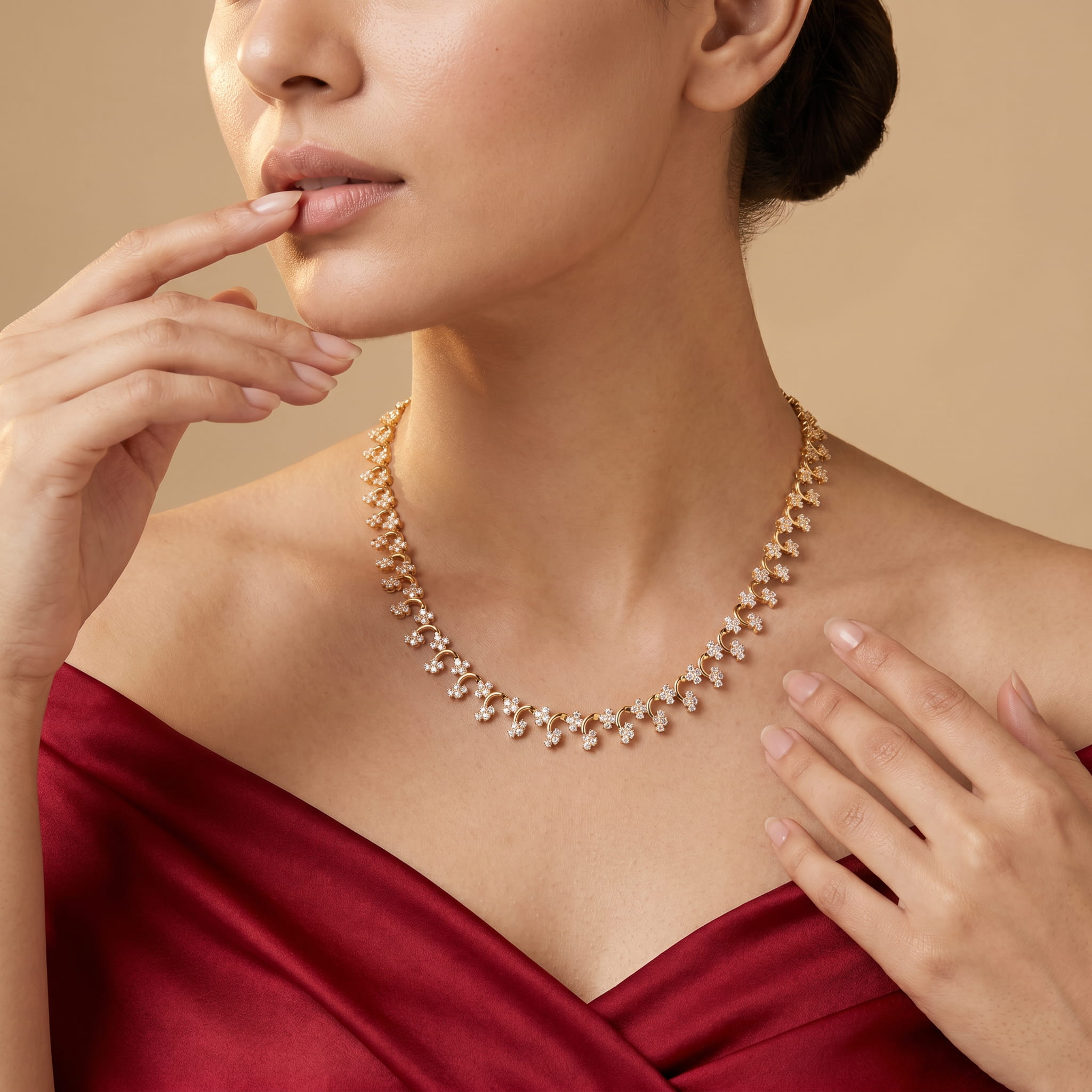
The metal provides the structure that holds every diamond in place. A real diamond necklace may be crafted in different gold purities depending on its design, required strength and intended finish.
Under our lifetime guarantee, we test all our jewellery at the C. Krishniah Chetty Gemological Laboratory, and it conforms to applicable BIS requirements and Indian hallmarking rules. The purity of the precious metal is guaranteed as recorded on the bill and the barcoded label accompanying the guarantee.
When examining a necklace, check:
- Gold purity
- Metal weight
- BIS hallmark
- Six-digit Hallmark Unique Identification number
- Any additional surface finish or metal treatment
You can check the HUID of hallmarked gold jewellery through the “Verify HUID” feature in the BIS Care application, as explained in the BIS consumer-protection guidance.
Remember that the hallmark confirms the purity of the precious metal. It does not certify the diamonds’ identity, origin or grade. Diamond details should be supported through the bill, guarantee and applicable diamond reports.
6. Examine the Settings and Construction
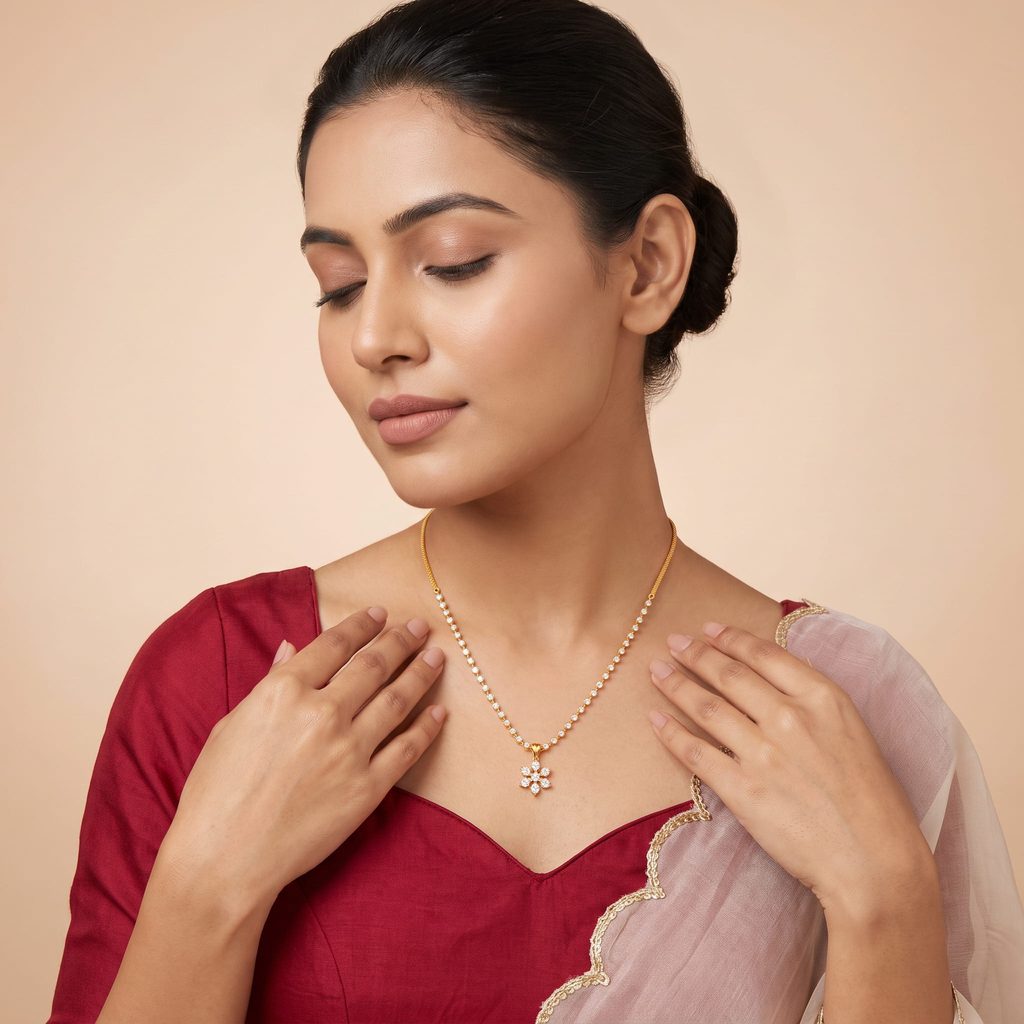
A necklace may look refined from the front, but you’ll best understand its construction by examining it from every side.
Look closely at:
- Whether each diamond sits evenly in its setting
- Whether the claws or prongs are aligned and secure
- Whether there are visible gaps around the stones
- How smoothly the individual sections move
- Whether the reverse is properly finished
- Whether any edges could catch on clothing
- How securely the clasp closes
- Whether an additional safety mechanism is present
A well-constructed necklace should follow the contours of the neck without twisting, tilting or forming awkward gaps. Flexible sections should move freely while still retaining sufficient strength.
7. Check the Length, Drape and Comfort
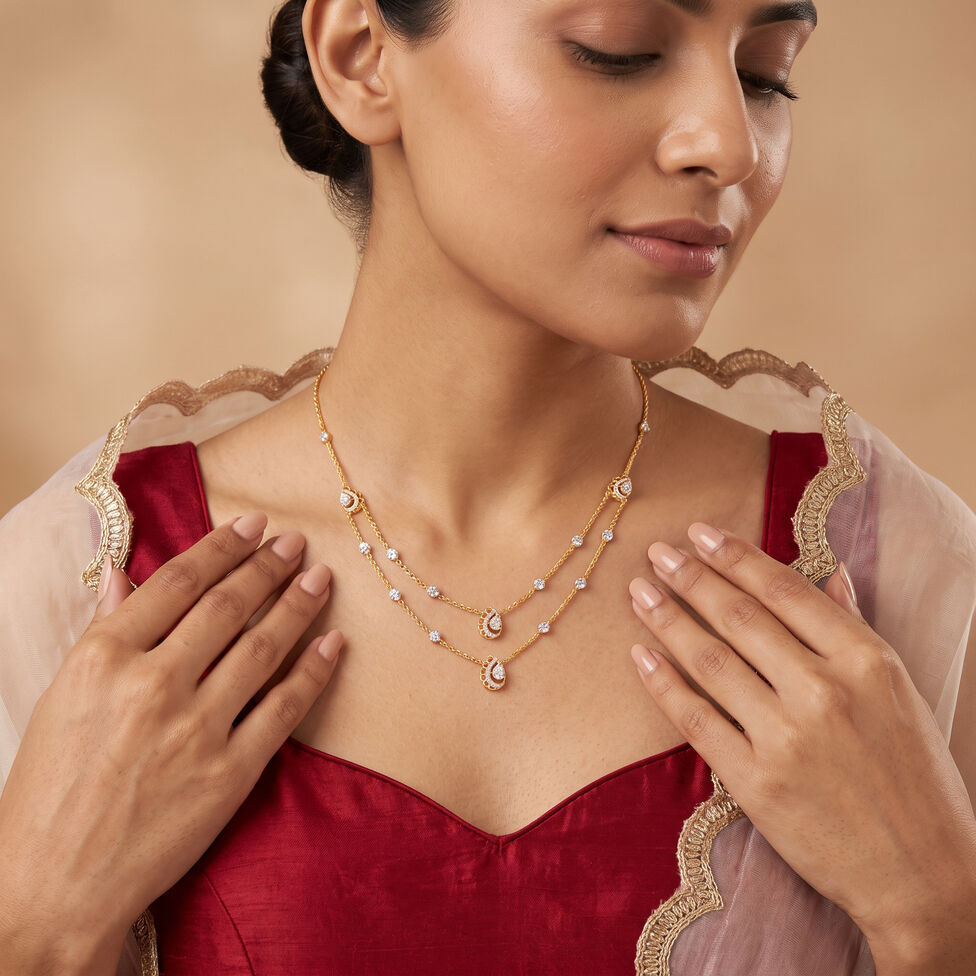
Whenever possible, try on the diamond necklace before buying it. Its fit and appearance can vary depending on the wearer’s neck size, height and outfit.
When trying it on, consider:
- Where the necklace rests on the neckline
- Whether the central section remains correctly positioned
- Whether the weight feels evenly distributed
- Whether the clasp or rear links pull the necklace backwards
- Whether the piece remains comfortable when sitting and moving
- Whether the length works with the intended clothing
Necklace measurements may not always include the clasp or connector, so ask the jeweller how they calculated the stated length. When purchasing a necklace as a gift, use one of the recipient’s existing necklaces as a reference. Our neckwear size guide can also help you understand necklace length and placement.
8. Review the Price Breakdown
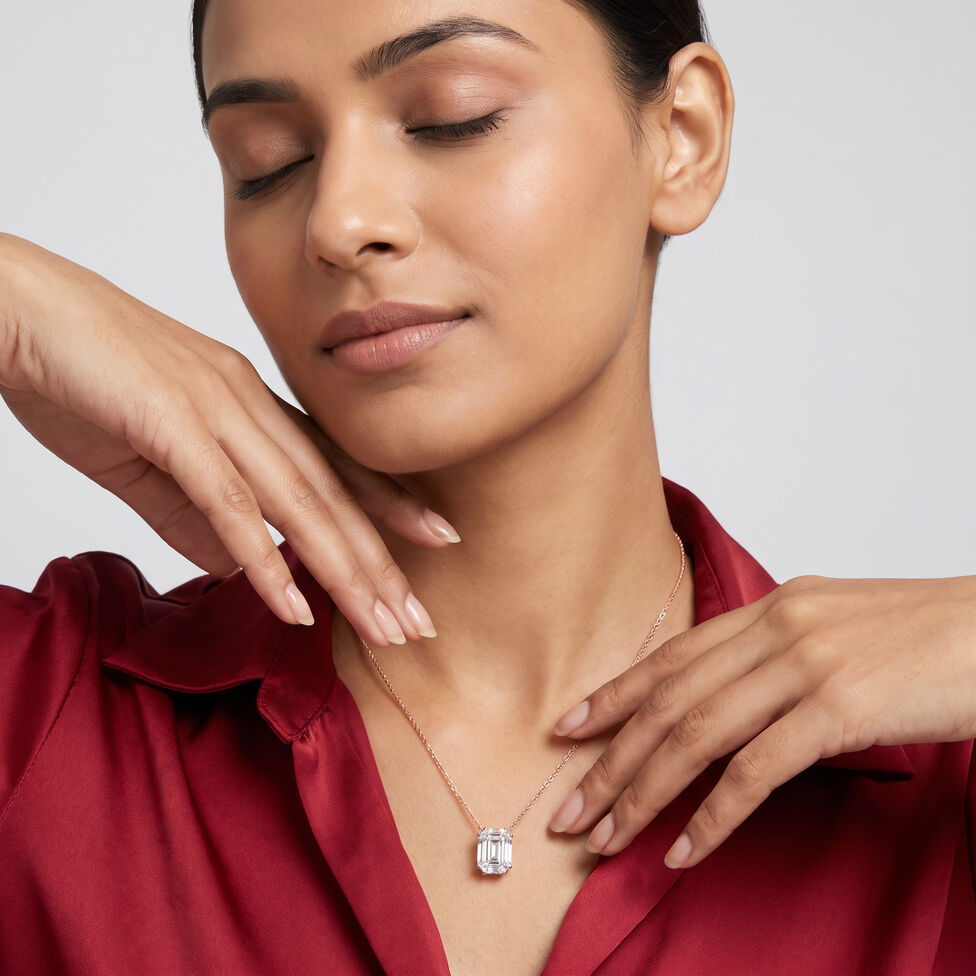
The price of a diamond necklace is influenced by more than its combined carat weight. It may reflect:
- The number, shape and quality of the diamonds
- The presence of larger, individually graded diamonds
- Gold purity and weight
- Complexity of the setting
- Construction and articulation
- Design development
- Craftsmanship and finishing
- Applicable taxes
Ask for an itemised bill rather than relying only on the final amount. This allows you to compare pieces more meaningfully and provides a documented record of what you have purchased.
A lower price isn’t necessarily better value if the diamond quality, metal purity, construction, or accompanying assurances differ.
9. Read the Invoice Carefully
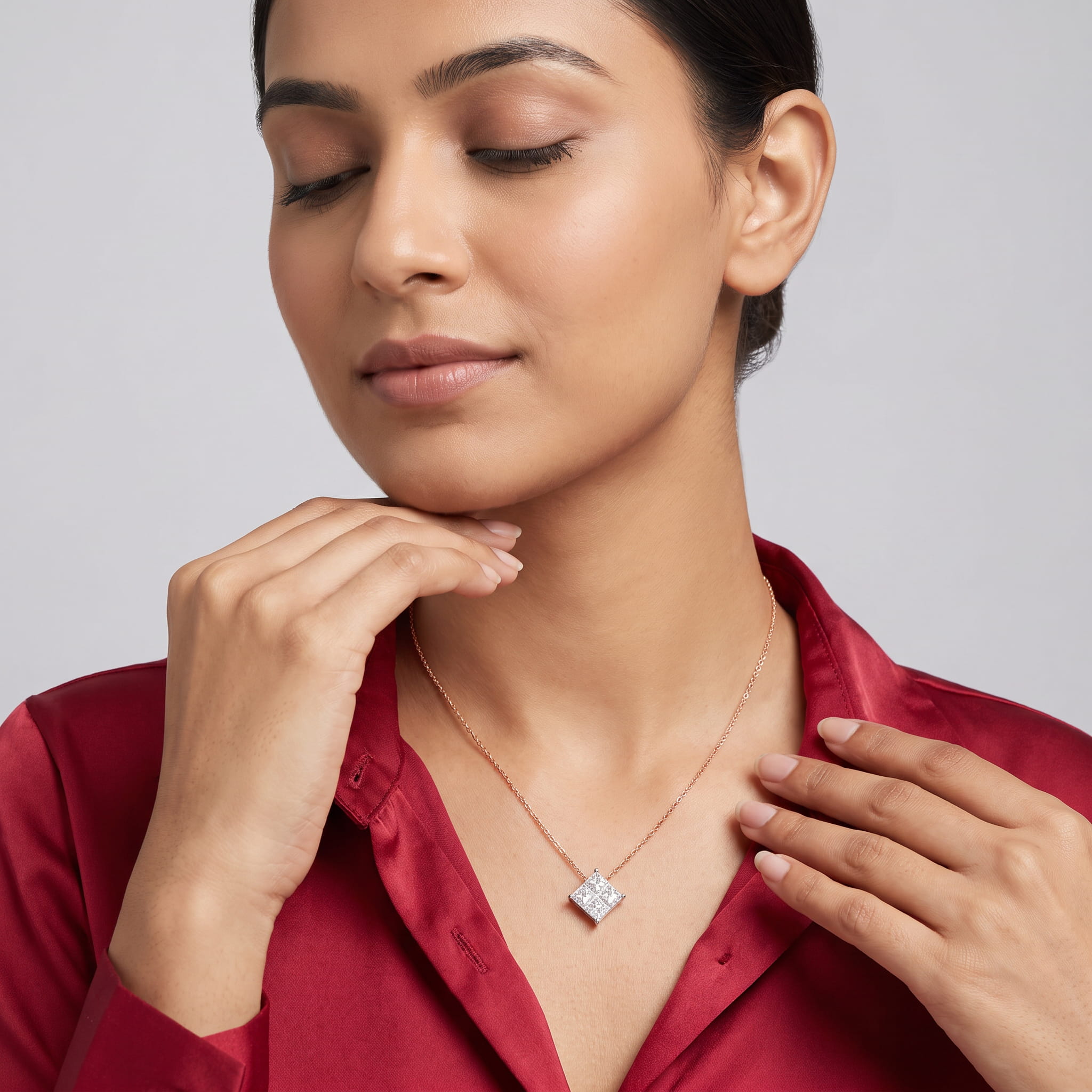
Before leaving the showroom, verify that the invoice or product document records the relevant specifications.
It should ideally include:
- Jewellery description
- Gold purity and weight
- Diamond count
- Total diamond weight
- Diamond colour and clarity details
- Individual diamond information, where applicable
- Other gemstone details, if present
- Making charges and taxes
- Diamond report numbers
- Guarantee information
Check that the details on the invoice match the necklace, product tag and accompanying documents. Preserve the original bill, guarantee card and diamond reports, as they may be required for servicing, exchange or resale.
10. Understand the After-Sales Terms
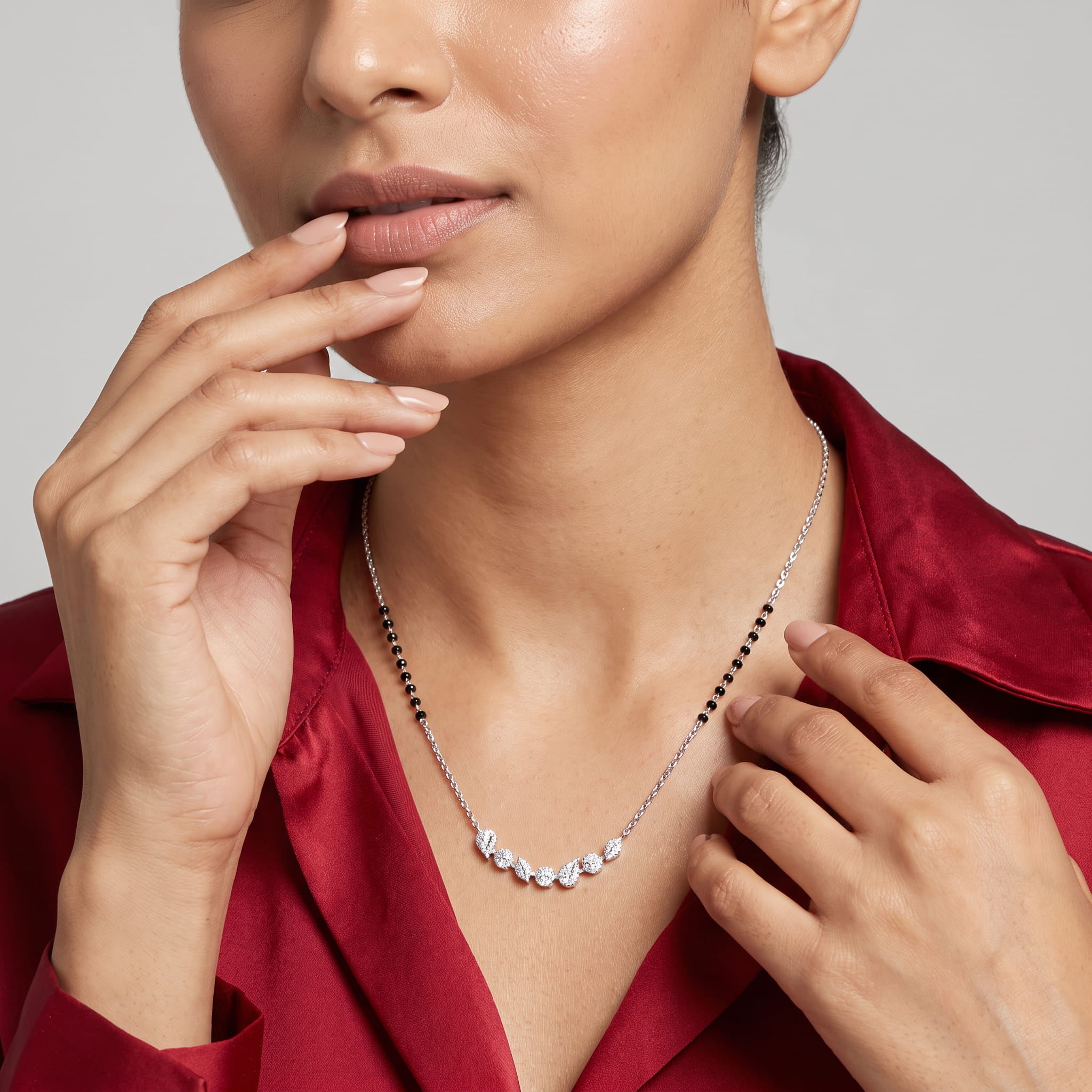
A diamond necklace contains multiple settings, links and moving components. Periodic professional inspections can help identify loose stones, worn links, or clasp issues before they become more serious.
Ask the jeweller about:
- Complimentary and chargeable maintenance
- Professional cleaning
- Setting inspections
- Repair procedures
- Valuation services
- Insurance documentation
- Exchange and buy-back conditions
- Exclusions from guarantees or warranties
Exchange and buy-back values may be calculated differently for diamonds, gemstones, gold and making charges. These conditions should be obtained in writing before purchase.
Frequently Asked Questions
How can I check whether a diamond necklace is real?
Do not rely on home tests. Ask for clear written disclosure of the diamonds’ origin, examine the invoice and guarantee, and review any applicable laboratory reports. A qualified gemmologist can also verify the stones using professional equipment.
Does a BIS hallmark certify the diamonds?
No. A BIS hallmark verifies the purity of the precious metal used in the jewellery. Diamond identity, origin and quality require separate documentation.
Does every diamond in a necklace have an individual report?
Not necessarily. Necklaces frequently contain many small melee diamonds, which may not each receive a separate grading report. The invoice and guarantee should still document their collective count, weight and quality. Larger individual diamonds may be accompanied by separate reports.
How should a diamond necklace be stored?
Keep it in a separate, soft-lined compartment, preferably lying flat. Avoid allowing it to rub against other jewellery. Follow the jeweller’s cleaning instructions and arrange periodic inspections of the settings, links and clasp.
Choose With Knowledge, Keep With Confidence
What draws you to a real diamond necklace is its design; what creates lasting assurance is understanding its quality. Its appeal comes from the relationship between the diamonds, design and craftsmanship. Accurate disclosure, secure construction and dependable after-sales care help you make an informed choice. Since 1869, we have placed gemmological knowledge, documented assurance and craftsmanship at the centre of the jewellery-buying experience.
Explore our diamond neckwear and select a piece whose quality can be understood as clearly as its design can be admired.